
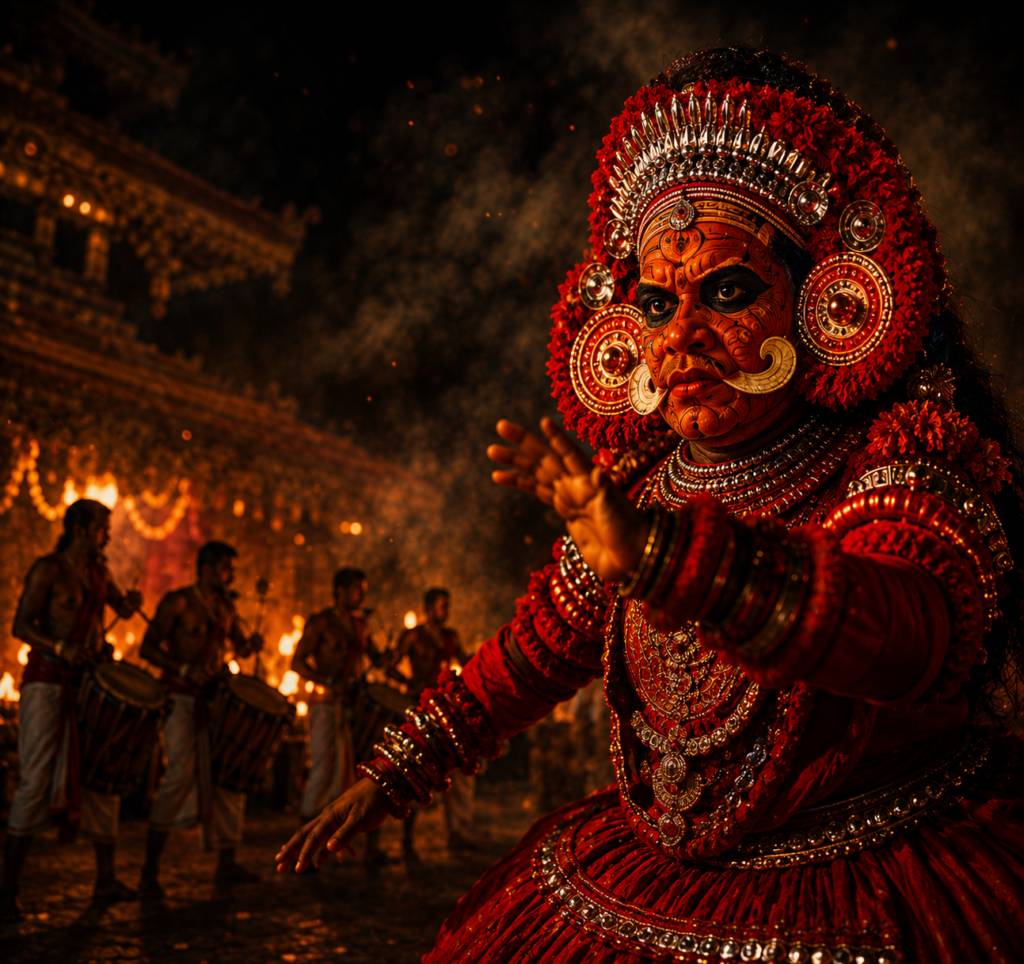
Traditional folk arts are an essential part of Kerala’s identity. These art forms reflect the history, beliefs, and values of local communities. They connect generations through performance, storytelling, music, and rituals. Folk arts continue to inspire people while preserving the rich heritage of the region.
Core Traditional Folk Art Elements
Kerala’s folk arts combine music, dance, costumes, and rituals. Each performance carries deep cultural meaning and local traditions. Art forms such as Theyyam, Thira, Kummatti, Velakali, and Poorakkali showcase unique artistic expressions. These performances help communities celebrate festivals and preserve ancestral knowledge.
Traditional costumes and vibrant makeup create powerful visual experiences. Folk artists spend years mastering performance techniques. Musical instruments add rhythm and energy to every presentation. Together, these elements create unforgettable cultural experiences.
Drivers of Growth for Traditional Folk Arts
Public interest in traditional performances continues to grow across Kerala. Festivals and cultural events create opportunities for artists to showcase their talents. Event organizers increasingly seek authentic entertainment that creates lasting impressions. This growing demand supports the preservation of folk traditions.
Many weddings, corporate gatherings, temple festivals, and community celebrations now feature traditional performances. Social media platforms help artists reach wider audiences. Educational programs encourage younger generations to learn traditional art forms. These factors contribute to the continued growth of folk arts.
Challenges and Risks
Many traditional artists face financial difficulties. Younger generations sometimes choose modern careers instead of learning folk arts. This creates a shortage of skilled performers. Some art forms risk losing their authenticity due to commercialization.
Limited funding can affect training and preservation efforts. Seasonal demand may reduce income opportunities for artists. Documentation of certain folk traditions remains inadequate. Addressing these challenges is essential for long-term sustainability.
Preservation Strategies
Training programs help transfer traditional knowledge to younger artists. Cultural organizations play an important role in supporting performers. Schools and colleges can introduce folk arts through workshops and cultural activities. Early exposure encourages appreciation among students.
Digital platforms can document performances and historical information. Government initiatives can provide financial support and recognition. Community participation also strengthens preservation efforts. These strategies help keep traditional arts alive for future generations.
Guide for Event Planners
Traditional folk arts can transform ordinary events into memorable experiences. Event planners should select performances that match the event theme and audience. Authentic presentations create stronger engagement and cultural value. Proper stage arrangements enhance the visual impact of performances.
Coordinating with experienced folk art troupes ensures professional execution. Planners should consider performance duration and audience interaction. Cultural performances often become the highlight of festivals and celebrations. They create lasting impressions for guests and participants.
The Role of Traditional Folk Arts in Modern Events
Traditional folk arts add uniqueness and authenticity to modern events. They create a strong cultural connection for audiences of all ages. Guests often remember cultural performances more than standard entertainment programs. These art forms bring energy, color, and meaning to celebrations.
Festival organizers use folk arts to attract larger audiences. Traditional performances create engaging experiences that encourage participation. Events become more memorable when they include cultural elements. Folk arts also help showcase Kerala’s rich artistic heritage.
For organizations and communities, cultural performances strengthen local identity. They promote appreciation for traditional values and customs. Folk artists gain opportunities to present their talents to wider audiences. This support helps preserve Kerala’s living traditions for future generations.
Economic Impact of Traditional Folk Arts
Traditional folk arts create income opportunities for artists and cultural performers. Many families depend on these art forms for their livelihood. Festivals and events generate regular work for skilled performers. This support helps sustain local artistic communities.
Cultural performances also benefit event organizers and local businesses. Increased attendance creates opportunities for vendors and service providers. Folk arts contribute to the growth of the regional economy. They generate value beyond entertainment alone.
The demand for traditional performances continues to expand across various events. Weddings, temple festivals, corporate functions, and public celebrations frequently include cultural attractions. This growing interest creates new opportunities for artists. It also encourages young performers to learn traditional art forms.
Future Opportunities for Traditional Folk Arts
Traditional folk arts have strong potential for future growth. Increasing cultural awareness creates new opportunities for artists and performers. People are showing greater interest in authentic cultural experiences. This trend supports the continued relevance of folk traditions.
Digital platforms allow folk artists to reach audiences worldwide. Performance videos help showcase traditional art forms beyond local communities. Online promotion increases visibility and attracts event organizers. Technology can support both preservation and promotion efforts.
Educational institutions can play a significant role in developing future artists. Workshops and cultural programs introduce students to traditional performances. Early exposure encourages appreciation and participation. This approach helps ensure that valuable artistic knowledge continues across generations.
Why Traditional Folk Arts Matter Today
Traditional folk arts remain important in a rapidly changing world. They preserve stories, customs, and values passed through generations. These performances help communities maintain a strong connection with their heritage. Folk arts serve as living expressions of cultural identity.
Modern entertainment offers many choices for audiences. However, traditional performances provide experiences rooted in history and authenticity. They create emotional connections that modern attractions often cannot replicate. This unique value keeps folk arts relevant and meaningful.
Cultural performances also encourage social unity and community participation. Festivals bring people together through shared traditions and celebrations. Folk artists become cultural ambassadors who pass knowledge to younger generations. Their work strengthens cultural continuity and pride.
Sreeranjini Naadan Kalaaroopangal: Promoting Kerala’s Folk Heritage
Sreeranjini Naadan Kalaaroopangal is dedicated to preserving and promoting Kerala’s traditional folk arts. The troupe presents art forms such as Traditional Theyyam, Fancy Theyyam, cultural processions, festival attractions, and other folk performances. Their programs add authenticity, color, and cultural significance to every event.
The troupe serves temple festivals, weddings, corporate programs, public functions, and cultural celebrations. Each performance is designed to engage audiences while maintaining traditional values. Through professional presentations, Sreeranjini helps introduce Kerala’s folk heritage to modern audiences.
By supporting artists and promoting cultural awareness, Sreeranjini contributes to the preservation of traditional art forms. Their commitment ensures that Kerala’s rich folk traditions continue to thrive for future generations.
Conclusion
Traditional folk arts are more than performances. They represent the heritage, creativity, and values of generations. These art forms preserve local traditions while creating meaningful experiences for modern audiences. Their continued presence strengthens cultural identity and community pride.
Despite facing challenges, traditional folk arts continue to thrive through the efforts of dedicated artists, cultural organizations, and event planners. Support for these art forms helps protect valuable traditions and creates opportunities for future generations. Preservation and promotion must work together to ensure their long-term sustainability.
For festivals, temple celebrations, weddings, and public events, traditional folk performances add authenticity, color, and lasting memories. They transform ordinary gatherings into unique cultural experiences that audiences appreciate and remember.
Sreeranjini Naadan Kalaaroopangal remains committed to promoting Kerala’s traditional folk arts through professional and authentic performances. By connecting heritage with modern celebrations, the troupe helps preserve these treasured art forms while ensuring they continue to inspire, educate, and entertain audiences for years to come.